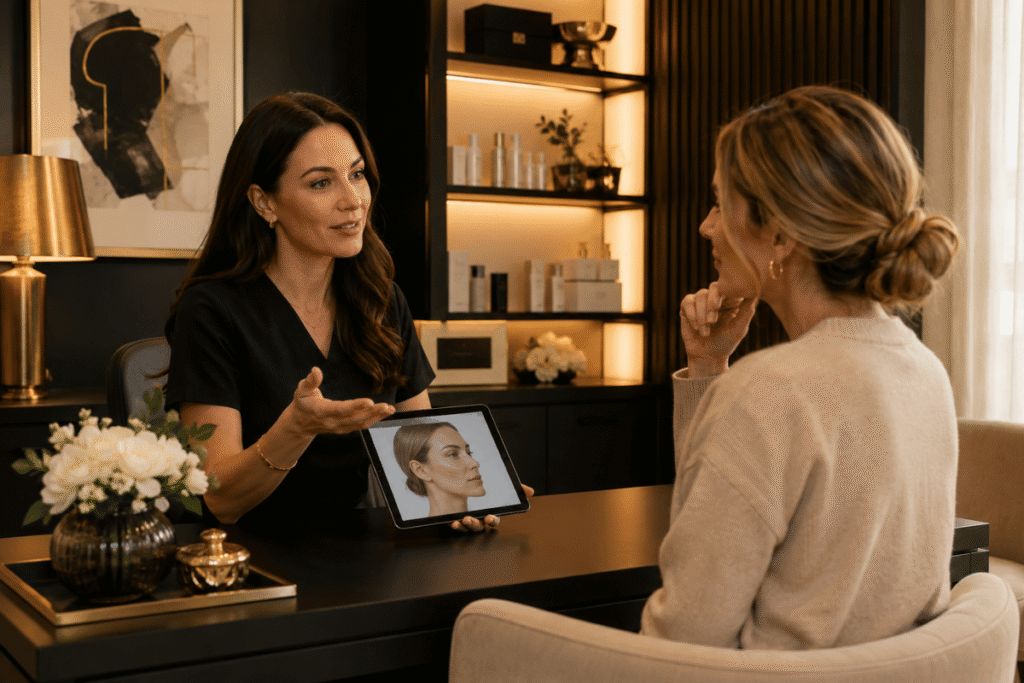
Medical aesthetics can support a wide range of personal goals, from softening selected signs of ageing to improving skin quality or addressing a specific concern. The most important part of the process, however, happens before any procedure: a thorough consultation with the appropriately qualified medical practitioner.
A consultation is not simply a formality or a sales conversation. It is where your health, expectations, treatment suitability, alternatives and potential risks are considered together. At MC Aesthetics in George, medical services are provided by independent healthcare practitioners who make their own clinical decisions and remain responsible for the treatments they perform.
What does “medical aesthetics” mean?
Medical aesthetics generally describes non-surgical procedures that require clinical assessment and are performed or prescribed by an appropriately qualified healthcare practitioner. These services differ from therapist-led skincare treatments because they involve medical judgement, professional scope and individual informed consent.
The fact that a procedure is non-surgical does not make it risk-free or suitable for everyone. Product choice, anatomy, medical history, technique, aftercare and the practitioner’s ability to recognise and manage complications all matter.
Why your consultation matters
Your practitioner needs enough information to decide whether a proposed treatment is appropriate and safe for you. During a consultation, you may be asked about:
- your concern and the change you hope to achieve;
- medical conditions, previous procedures and surgery;
- prescription and non-prescription medication or supplements;
- allergies, sensitivities and previous adverse reactions;
- pregnancy or breastfeeding;
- active infections, cold sores, wounds or recent dental work;
- your tendency to bruise, scar or develop pigmentation; and
- your available recovery time and important upcoming events.
Answer these questions honestly, even if a detail seems unrelated. Undisclosed information can affect suitability and increase the risk of an unwanted response.
Suitability is individual
A treatment that suited a friend or produced an appealing result online may not be the right option for you. Facial anatomy, skin condition, age, health history, previous treatment and personal preference all influence a recommendation.
Sometimes the responsible outcome of a consultation is to postpone treatment, select a different approach or recommend no procedure at all. Your practitioner may also refer you to another healthcare professional when a concern falls outside their scope or requires further investigation.
Understanding informed consent
Informed consent means more than signing a document. Before agreeing to a medical aesthetic procedure, you should receive understandable information about:
- what the proposed procedure involves;
- the expected benefits and realistic limitations;
- material risks and possible complications;
- reasonable alternatives, including choosing no treatment;
- the expected recovery and aftercare;
- how long an effect may last and whether maintenance may be required; and
- who to contact if you have a concern afterwards.
You should have an opportunity to ask questions and participate in the decision. Consent can only be meaningful when you understand the information and choose freely, without pressure.
What are realistic results?
Realistic results begin with an honest conversation about what a treatment can and cannot change. Medical aesthetics may refine or support selected features, but it cannot guarantee perfection, reproduce another person’s appearance or resolve every concern.
Natural-looking treatment is also highly personal. For one person, it may mean a very subtle change; for another, it may involve a progressive plan across several appointments. A conservative, staged approach can allow both you and your practitioner to assess the response before considering further treatment.
Healing and outcomes vary between individuals. Swelling, redness, tenderness, bruising or other temporary effects may occur depending on the procedure, while less common complications may require prompt medical attention. Your practitioner should explain the risks relevant to the treatment recommended for you.
Choosing who provides your treatment
Ask who will consult with you, who will perform the procedure and whether the practitioner is registered with the appropriate South African professional body. The Health Professions Council of South Africa provides an online register that can be used to verify relevant healthcare practitioners.
You can also ask about the practitioner’s training and experience with the proposed procedure, the products or technology involved, their professional indemnity arrangements and how complications or after-hours concerns are managed.
Independent practitioners at MC Aesthetics
Doctors and other medical practitioners consulting from MC Aesthetics operate as independent healthcare providers. They are not employees of MC Aesthetics. Each practitioner determines their own clinical recommendations, treatment plans and fees and carries responsibility for the professional care they provide.
MC Aesthetics provides consulting rooms and administrative support. A booking facilitated through the practice does not change the independent professional relationship between you and your treating practitioner.
Preparing for and recovering from treatment
Preparation and recovery guidance varies by procedure. Do not assume that advice for one medical aesthetic treatment applies to another. Follow the instructions given by your practitioner and disclose any change in your health or medication before the appointment.
You can consult the MC Aesthetics pre- and post-care library for general information. Your practitioner’s personalised instructions always take priority, particularly where medical treatment is concerned.
Begin with a considered conversation
If you are exploring medical aesthetic treatments, begin with a consultation rather than choosing a procedure from a trend or photograph. A responsible plan should be based on clinical suitability, clear information and a result that respects your individual features and preferences.
Request a consultation at MC Aesthetics in George to discuss the appropriate next step. Treatment will proceed only where the independent practitioner considers it suitable and informed consent has been obtained.
This article is general educational information and does not constitute medical advice, diagnosis or a treatment recommendation. Results vary, risks exist with all procedures, and no specific aesthetic outcome can be guaranteed.