01
Consultation
Hair colour, calibre, density, growth pattern, skin condition, health history and previous removal methods are assessed before treatment.


Hair & Hair Removal · George
Professional treatment planning begins with an individual skin assessment, a discussion of suitability and clear expectations.
Precision Permanent Hair Removal
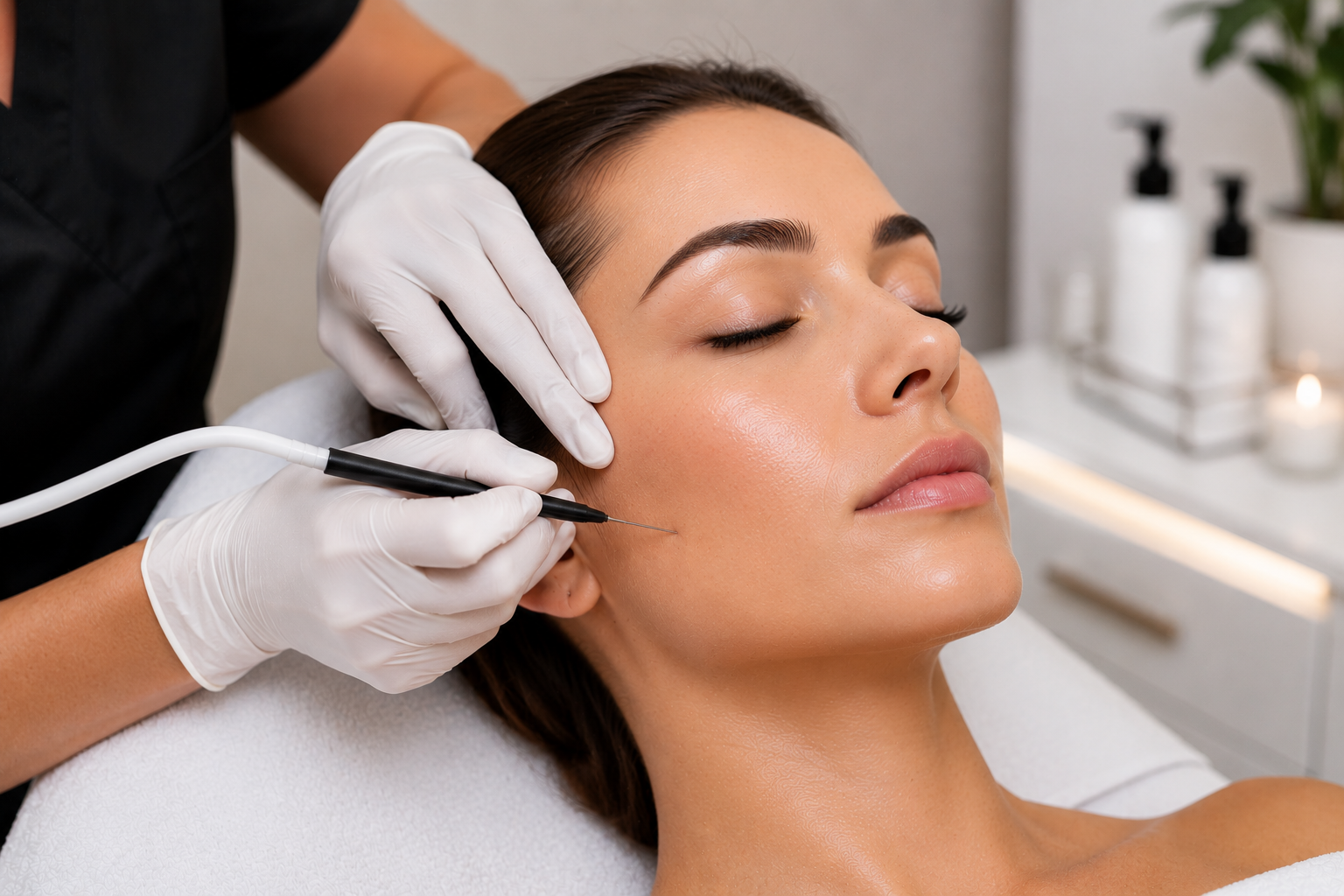
Electrolysis is a precision hair-removal method in which a fine sterile probe is inserted into the natural opening of an individual hair follicle. A controlled electrical current is then applied to damage the follicle’s ability to produce hair, and the released hair is removed gently.
Unlike light-based treatments, electrolysis does not rely on pigment within the hair. It can therefore be considered for suitable light, red, white or grey hairs as well as darker hairs. Consultation confirms whether the area, skin and hair pattern are appropriate.
Follicle-by-follicle treatment
Including light and grey hair
Planned across growth cycles
Electrolysis or Laser?
Electrolysis treats individual follicles and can permanently remove successfully treated hairs, regardless of colour. Laser works more quickly across larger areas but relies partly on hair pigment and is described as permanent reduction. Some treatment plans may use one method or combine both at different stages.
Your Treatment Journey
Not every hair is visible or in the same growth phase at one time. A realistic plan considers area size, hair density, tolerance and the repeated emergence of untreated follicles.
01
Hair colour, calibre, density, growth pattern, skin condition, health history and previous removal methods are assessed before treatment.
02
The area is prepared hygienically and an appropriate sterile single-use probe is selected. Skin integrity is checked before proceeding.
03
Each suitable follicle is entered through its natural opening, treated with controlled current and the loosened hair removed without force.
04
The skin is calmed and aftercare explained. Further sessions treat new hairs as they become available in the appropriate growth phase.
Consultation & Safety
Electrolysis deliberately applies energy within the follicle. Appropriate screening, sterile probes, accurate insertion and conservative settings help minimise burns, infection and scarring risk.
Disclose pregnancy, medicines, implanted electrical devices, bleeding or healing conditions, keloid tendency, recent procedures and any active infection, cold sore, wound, dermatitis or inflammation in the area.
Brief stinging is common. Temporary redness, swelling, tenderness and tiny crusts may follow. Less common risks include burns, infection, prolonged pigment change or scarring.
Keep the area clean, do not pick crusts, avoid unapproved actives, friction, swimming and excess heat for the advised period, and use diligent sun protection.
Frequently Asked Questions
Your consultation provides realistic guidance for your hair pattern, area and expected treatment journey.
Electrolysis can permanently remove successfully treated hairs by damaging individual follicles. Several sessions are needed to address hairs emerging across different growth cycles.
Yes. Electrolysis does not depend on hair pigment and can treat suitable light, red, white and grey hairs that laser may not effectively target.
There is no universal number. Area size, density, growth cycles, hormonal influences and appointment consistency all affect the total journey.
Most people feel a brief sting or heat with each treated follicle. Sensation varies by area, settings and individual tolerance.
Generally no, because the practitioner needs visible hairs and accessible follicles. Follow the clinic’s guidance on trimming or shaving between sessions.
Previously unseen hairs emerge in later cycles, and hormonal changes can stimulate new growth. This does not necessarily mean a successfully treated follicle has regrown.
Begin With Consultation
Book an Electrolysis consultation at MC Aesthetics in George to assess your hair, skin and appropriate session plan.
Book an Electrolysis ConsultationMC Aesthetics · George · Garden Route